Kindermusik With Notable Kids

Inspiring a Lifetime of Potential... Offering the best Music & Movement classes for babies, toddlers, & preschoolers.

Thursday, June 21, 2007

Where Does the Time Go?


I can hardly believe Piper is 8 months already! She's a busy girl, with not a lot of regard for sleep. Apparently, it's overrated.

She's started crawling, so it's time to do some more serious baby-proofing again (perhaps we'll set up a gate at the top of the stairs...).

Jacob just had his last day of preschool today. Sigh. Thanks goodness for summer camps! Have you signed up yet?

PS: The fall schedule is up too!

Labels: , , , , , ,

Wednesday, May 09, 2007

Can you Believe It?

It's the last week of classes already! (For most of you anyway... The Saturday classes hit a number of holidays, so they are meeting this weekend, and again on the 26th. Monday's class is meeting for the last time next Monday.)

Be sure to sign up for summer camps! Busy Days for babies, Creatures in My Backyard for toddlers & families, and On the Road for preschoolers. We also have a Sign & Sing class running.

Check the schedule, and send me an email soon. A couple of classes are close to capacity. The next set starts up the week of May 28th. If you decide to do it again in the height of summer, it's only $55 because you will already have the home kit! (The website says there are different curricula running in July/August - I haven't been able to get down to the office computer to change it yet! We are repeating the curricula in July/August because I can't order the others from Kindermusik International this year.)

Sarah teaches on Saturdays, and Jessica teaches on Tuesdays, Wednesdays, & Thursdays. I will be teaching on Tuesday afternoons and possibly Thursday in July/August.

Looking forward to seeing you this summer!

Labels: , , , , ,

Friday, April 27, 2007

SIGN & SING Week 4

This week in class we learned more about recognizing and responding to your child’s versions of signs. Just as a child’s first attempt to pronounce “water” may sound like “wa-wa,” a first attempt at signing MORE may look as if she is clapping her hands or fists together.

Whenever you see your child moving her hands and you think she may be signing, respond enthusiastically. This will encourage her to use her hands to communicate with you.

Try MORE signing at home this week. Your Family Activity Guide this week explains how to use Conceptual Grouping to learn even more signs.

Labels:

Monday, April 16, 2007

Sign & Sing Week 3


Over the past two weeks we have used strategies to make opportunities for signing with your child more effective.

This week, we introduced an Adaptation Strategy. This occurs when you move a toy next to your face so your child can see you making the sign while you hold the toy. Watch your baby’s eyes as she looks back and forth from the object to you. You have created the ideal environment for learning.

Page 10 in your Family Activity Guide gives you more ideas on how to use adaptation strategies even in the quiet times of the day, such as reading a book together. Your child is naturally captivated and relaxed while sitting in your arms, sharing a story—it’s a perfect time to use the signs you have learned from class!

P.S. Only two more classes to go! Keep the learning going all year long! In the coming weeks I’ll let you know more about Kindermusik summer camps starting in May.

Labels:

Monday, April 02, 2007

SIgn & Sing Week 2

Class was so much fun this week with all the new activities and opportunities for signing with your child. Keep playing and signing together at home. Review your DVD and flashcards in the At Home Materials and look around the house for items we used in class such as a teddy bear, ball, duck, or toy car. Pick an opportune time to engage your child in play with these items and use sign language. Try not to worry about whether your child sees your signs. The goal this week is just to get started signing and become comfortable yourself.

Some phrases you can use include (sign language is commonly represented in print with CAPITAL letters):

“WHAT is that?”
“It’s a BALL.”
“Do you want to PLAY?”
“Do you want me to roll it some MORE?”
“We’re ALL DONE now.”

Take your time and repeat phrases several times. Don’t forget your CLEAN-UP song at the end of playtime. See you in class in 2 weeks!

Labels:

Tuesday, March 27, 2007

Sign & Sing Week 1

Welcome to Sign & Sing with Kindermusik!

You are giving your child the tools to communicate with you at an early age. Be assured that signing will not delay your child’s speech development in any way. In fact, studies have shown that your child may begin to speak sooner given these early language skills.

This week we learned about See A Lot/Do A Lot Signs and Highly Motivating Signs. You and your child will make great learning strides together when you find more ways to use these strategies at home. Turn to page six of your Family Activity Guide and you’ll see how your flashcards will help you play, practice, and communicate together.

Many of you asked for specific signs in class. Here is a great resource for learning specific signs. It shows quick video clips of people signing words that you can look up on an index. Remember, however, to sign smarter, not harder! Pick just a few each week to introduce to your child.

Labels:

Thursday, March 01, 2007

Summer Camps are Coming!

There are two sessions to choose from this year, including a new 2.5 hour Imagine That camp. I'm so excited!

We've got Village camps for babies (newborn - 18 months): BUSY DAYS

Our Time camps for toddlers (18 months - 3 years): CREATURES IN MY BACKYARD

Imagine That camps for preschoolers (3.5 - 5 years): ON THE ROAD

Family Time camps for families (newborn - 7 years): CREATURES IN MY BACKYARD

and Sign & Sing classes

Camps run May 28th - June 30th and July 16th - August 18th. See our SUMMER SCHEDULE online to register.

Labels: , , , , ,

Tuesday, January 09, 2007

Don't forget about Sign & Sing!


Don't forget that we have Sign & Sing classes too!

Mondays at 1:15 & Tuesdays at 11:15
Signing for babies 6 months - 2 years

A five week introductory class to teach you how to sign most effectively with your child.

Hearing children who know signs, learn language almost twice as fast. As early as 11-14 months old, hearing children exposed to sign language put little sentences together faster than non-signing children, who do not begin to combine words into short sentences, such as "Da-da car" until the average age of 20 months.
Study conducted by Dr. Michelle Anthony and Dr. Reyna Lindert, Signing Smart program founders.

As with other Kindermusik classes, you can enjoy the experience all week long. Your home kit includes a DVD, flash cards, and an activity book.

Sign Up Today!
(Pardon the terrible pun!)

Labels:

Tuesday, January 02, 2007

Only 3 Weeks Left to Register!


It's a new year, with a whole new semester of Kindermusik! Classes start January 22nd.

Village: Rhythm of My Day & Hickory Dickory Tickle & Bounce
Our Time: Fiddle-Dee-Dee
Imagine That: Cities
Family Time: Here, There, & Everywhere
Sign & Sing: Session A

Check the schedule and register now!

Feel free to email me with any questions you might have.

Labels: , , , , ,

Thursday, December 07, 2006

Oops!

Sorry, folks!

I should have put the link to the class schedule up! That would have made it easier for you to find a class...

Here it is: Winter Schedule

The perils of blogging at midnight and/or with screaming baby and toddler who has discovered the joys of online Sesame Street...

Labels: , , , , ,

Wednesday, December 06, 2006

Sign & Sing - New Classes!


NEW 5 WEEK SESSIONS START JANUARY 22nd!
6 months - 2 years

A different approach from other sign language programs. Through songs, toys, and loving playtime between you and your child, Kindermusik Sign & Sing shows you more than 50 signs your child can use to communicate with you.

Using research-proven methods shown to speed language development in hearing children, you'll see how sign language can ease frustration and enhance long-term learning abilities for your child.

Hearing children who know signs, learn language almost twice as fast. As early as 11-14 months old, hearing children exposed to sign language put little sentences together faster than non-signing children, who do not begin to combine words into short sentences, such as "Da-da car" until the average age of 20 months._Study conducted by Dr. Michelle Anthony and Dr. Reyna Lindert, Signing Smart program founders.

ENROLL BY DECEMBER 22nd TO RECEIVE THE EARLY BIRD DISCOUNT

Labels:

Monday, October 16, 2006

SIGN & SING Week 5


It’s hard to believe that five weeks have gone by already! It's always so rewarding to watch your child discover new ways to communicate. In the last five weeks, you have given your child an early start on learning and building vocabulary, as well as strengthening the bond between you by learning more about the ways she learns best.

Keep signing, and check out a Village class!

Labels:

Friday, October 06, 2006

SIGN & SING Week 4


This week in class we learned more about recognizing and responding to your child’s versions of signs. Just as a child’s first attempt to pronounce “water” may sound like “wa-wa,” a first attempt at signing MORE may look as if she is clapping her hands or fists together.

Whenever you see your child moving her hands and you think she may be signing, respond enthusiastically. This will encourage her to use her hands to communicate with you.

Try MORE signing at home this week. Your Family Activity Guide this week explains how to use Conceptual Grouping to learn even more signs.

Labels:

Monday, October 02, 2006

KINDERMUSIK CLASSES THIS WEEK ~


VILLAGE: Dream Pillow

Sleep Well, Parent and Child: Massage enables babies to release tension, helping them learn to cope or self-regulate. This helps them achieve greater relaxation and a sense of well-being, which tends to promote more regular sleep patterns. Parents tend to sleep better as a result of the improvements in their baby’s sleep.

Patterns in Language: Pattern awareness is crucial to learning and memory. Just as in story reading, singing directly exposes participants to the patterns of language, including rhythm, speech, sounds, syntax and rhyme.

Steady Beat: Internalizing a steady beat is important to baby’s developing physical coordination. Later on this internalized steady beat will help her learn to use scissors, bounce a ball, and walk with self-confidence.

Sensitivity: Hearing a variety of tonal registers and timbres helps your baby become more aware, alert, and sensitive not only to music but to his tonal environment.

Balance and Coordination: Moving in different directions and in a variety of ways is important to the development of your baby’s vestibular system. His sense of balance, coordination, and locomotion all depend on the proper functioning of this very important system.
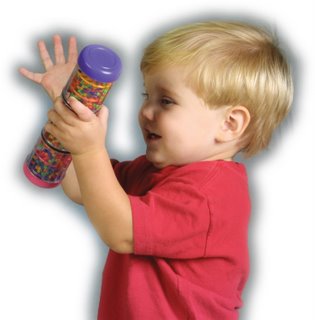
OUR TIME: Milk & Cookies

Repetition: Growth and development of the child from birth to seven years old, take place primarily through the child’s body experiences. Repetition aids in solidifying the neural pathways which are formed through experience of activities.

Movement: Movement is a universal, full-time, personal, childhood occupation, and its importance in children’s early learning experiences cannot be overemphasized. Children develop movement in space to understand position, size, distance, and shape. Continuous activity is essential for an optimal rather than a marginal level of motor performance.

At Home: Look on page 9 of your home activities book for ideas on how to get some help while washing & drying the dishes!

Body Control: During movement activities, children learn to organize the available space in relation to themselves and in relationship to objects and other individuals they are developing body control and confidence in the power and ability of their own bodies.

Nurture & Control: Encouraging participation provides a framework of appropriate behaviour for your child. A combination of nurturance and control, encouragement, demandingness, and communication provides the emotional and social context req uired for your child’s optimum development. (Fostering Children’s Social Competence: The Teacher’s Role, Lilian G. Katz & Diane E. McClellan)


IMAGINE THAT: Hello, Weather!

Tempo: The speed of a composition or a section thereof, ranging from very slow to very fast.

Literacy Environment: A supportive literacy environment includes opportunities for children to observe parents and teachers as they engage in reading and writing activities. Writing down the children’s suggestions visually affirms their contributions to the activity and reinforces the importance of the written word.

Fantasy Play: Fantasy play allows for the personal integration of temperament, experience, and concepts that help the child understand the all-important question, ‘Who am I?’ and thereby become a mentally healthy person. When children pretend, they manipulate events and actions, which gives them a sense of competence, an important ingredient in mental health.


SIGN & SING
Over the past two weeks we have used strategies to make opportunities for signing with your child more effective.

This week, we introduced an Adaptation Strategy. This occurs when you move a toy next to your face so your child can see you making the sign while you hold the toy. Watch your baby’s eyes as she looks back and forth from the object to you. You have created the ideal environment for learning.

Page 10 in your Family Activity Guide gives you more ideas on how to use adaptation strategies even in the quiet times of the day, such as reading a book together. Your child is naturally captivated and relaxed while sitting in your arms, sharing a story—it’s a perfect time to use the signs you have learned from class!

Labels: , , ,